
In this article

The cost of ethical failures has never been higher. The SEC filed 760 enforcement actions in fiscal year 2024, resulting in more than $8.2 billion in penalties — with many violations stemming from leadership decisions that prioritized short-term gains over ethical standards.
Yet beyond avoiding penalties, organizations are discovering that ethical leadership creates competitive advantages: LRN's 2024 Benchmark of Ethical Culture Report found that companies with the strongest ethical cultures outperform those with weaker ethical cultures by 50%. In addition, a great ethical culture is bound to attract top talent more effectively and maintain stakeholder confidence during market volatility.
This comprehensive guide will help you understand and implement ethical leadership by covering:
Ethical leadership goes beyond simply complying with the law. It's about setting the tone at the top by demonstrating a commitment to ethical behavior in all aspects of business operations. This includes:
The business case for ethical leadership has never been stronger, with quantifiable benefits that directly impact organizational performance and risk management:
Building a culture of ethics and compliance requires a systematic, technology-enabled approach that scales with organizational growth. Key strategies include:
Start with a code of ethics that addresses specific situations your organization faces, not generic statements. Include decision-making criteria for common ethical dilemmas, clear escalation procedures, and specific examples of acceptable and unacceptable behavior.
Update frameworks annually to address new risks like AI bias in hiring decisions, data privacy violations, and third-party vendor relationships. Make the code easily searchable and accessible through your governance platform.
Leadership behavior sets organizational tone more than any policy document. When leaders make mistakes, they should acknowledge them publicly and explain the corrective actions taken.
Share decision-making rationale that demonstrates ethical considerations, especially during difficult business decisions like layoffs or strategic pivots. Schedule regular "ethical leadership" discussions in executive meetings to reinforce priority and create accountability among senior leaders.
Implement anonymous reporting systems with multiple access points: online portals, phone hotlines, and third-party services. Ensure reports go directly to board-level oversight, not just management.
Establish clear timelines for investigation (typically 30-60 days) and regular status updates to reporters. Track reporting metrics and investigate low reporting rates, which often indicate fear of retaliation rather than absence of issues.
"There should be a direct, consistent line of communication from the Chief Compliance Officer (CCO) or General Counsel (GC) to the board," says Pav Gill, CEO of Confide.
This direct communication ensures ethical concerns reach appropriate governance levels before they escalate into significant violations.
Move beyond generic compliance training to situation-specific scenarios. Use real examples from your industry:
Conduct role-playing exercises for management teams and provide decision-making frameworks for common ethical conflicts. Measure training effectiveness through scenario testing, not just completion rates.
Build ethical behavior into performance reviews and promotion criteria. Create specific recognition programs for employees who report concerns or suggest process improvements. Share success stories of ethical decision-making in company communications. Additionally, consider financial incentives tied to ethical performance metrics, not just business outcomes.
Develop a clear escalation matrix that applies regardless of employee level or performance. Document all disciplinary actions and ensure consistent application across departments. Communicate consequences organization-wide (while maintaining appropriate confidentiality) to demonstrate commitment.
Build lasting ethical behavior with science-backed microlearning that engages employees and reinforces key compliance messages year-round.

Compliance leaders play a vital role in driving and supporting ethical leadership efforts. Here are some key contributions they can make:
Create ethical decision trees for common business scenarios:
Include specific escalation triggers — such as when deals exceed certain values, when customer data crosses jurisdictional boundaries, or when AI systems make decisions that affect employment.
Replace annual compliance presentations with scenario-based simulations. Use actual company situations: procurement teams practicing vendor due diligence, sales teams navigating gift policies during deal negotiations, and HR teams handling discrimination complaints.
Track behavior change through metrics beyond completion rates: measure reporting frequency, decision escalation patterns, and post-training scenario performance. Conduct follow-up assessments 90 days after training to measure retention and practical application.
Low reporting rates usually indicate fear, not the absence of issues. Create multiple reporting channels: anonymous online forms, third-party hotlines, and skip-level manager conversations. Publish quarterly reporting statistics (without details) to demonstrate the system's use and leadership response.
Ensure reports bypass direct management and reach board oversight within 48 hours for significant issues. Additionally, establish investigation timelines (30 days for initial assessment, 60 days for resolution) and communicate these standards to reporters.
Develop early warning systems for regulatory compliance changes affecting your industry. Set up alerts for relevant enforcement actions, subscribe to regulatory guidance updates for compliance monitoring, and participate in industry compliance groups. Create quarterly risk assessments that evaluate AI deployment, third-party relationships, and data handling practices.
Implement specific monitoring protocols for high-risk areas: procurement activities in high-corruption regions, customer data collection in regulated industries, and AI decision-making in employment or lending. Use governance platforms to track these assessments and automatically flag unusual patterns.
Track leading indicators: time between issue identification and resolution, percentage of concerns raised before external discovery, and employee confidence in reporting systems. Connect ethical performance to business outcomes like customer retention rates, employee turnover in high-trust vs. low-trust departments, and regulatory examination results.
Use board reporting to demonstrate program value: show correlation between ethics training and reduced violations, highlight proactive issue identification that prevented larger problems, and present benchmarking data against industry peers. Governance platforms can automate these reporting dashboards and ensure consistent board communication.
When employees report ethical issues, how you respond determines whether they'll speak up again — and whether other employees will trust the system. To this end, keep a close eye on the following:
Building sustainable ethical leadership in your organization is going to take more than good intentions. It demands technology infrastructure that encodes ethical principles into daily workflows.
Organizations need solutions that automate routine compliance tasks, provide real-time insights, and enable teams to focus on culture building rather than administrative overhead.
With this objective in mind, Diligent provides:
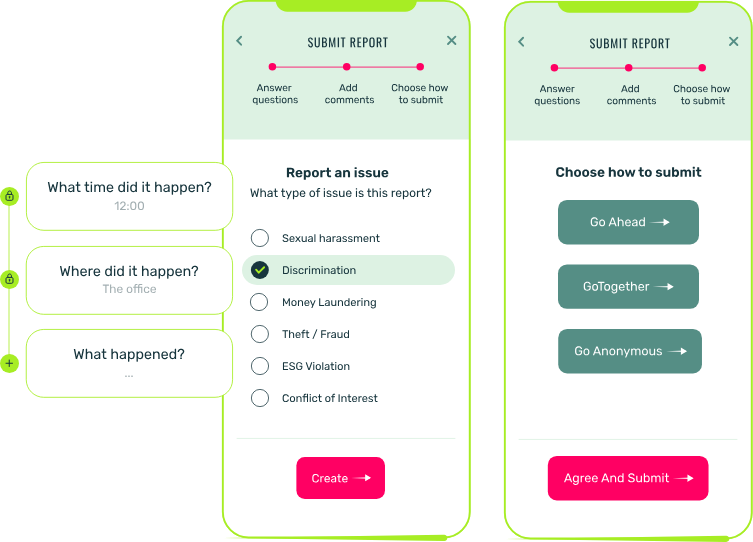
This technology foundation enables compliance teams to shift from administrative tasks to strategic culture building, creating sustainable behavioral changes that withstand regulatory scrutiny and workforce transformation.
Ready to take charge of your organization’s ethics? Schedule a demo to see how Diligent can strengthen ethical decision-making while maintaining comprehensive documentation across your entire organization.
Organizations typically observe initial improvements in employee engagement and internal culture within 90-180 days of implementing comprehensive ethical leadership programs. However, full cultural transformation and measurable risk reduction often require 12-24 months of consistent implementation and reinforcement.
Growing companies frequently struggle with maintaining ethical standards during rapid scaling, balancing stakeholder interests during funding rounds, and establishing professional governance structures while preserving entrepreneurial culture. Additionally, resource constraints can make it challenging to implement comprehensive ethics programs.
Growing companies should prioritize technology-enabled solutions that automate governance, risk and compliance tasks while focusing human resources on culture building and strategic oversight. Start with clear ethical frameworks, implement secure reporting channels, and leverage governance platforms that scale with organizational growth while maintaining comprehensive documentation and risk monitoring capabilities.
Key metrics include employee engagement scores, ethics hotline utilization rates, compliance violation trends, stakeholder satisfaction measures, and regulatory examination results. Advanced organizations also track the correlation between ethical leadership metrics and business performance indicators.
Technology should streamline ethical decision-making processes, provide comprehensive documentation, enable secure communication channels, and offer real-time risk monitoring. However, technology must supplement, not replace, authentic leadership commitment to ethical behavior and cultural development.
Request a demo and discover how Diligent can strengthen your ethical leadership foundation and support sustainable organizational growth.