

In this article

Your internal controls provide the confidence you need that your processes will ensure compliance with regulations, legislation and best practices. Control testing is the process of auditing these controls to validate their effectiveness.
Controls testing should form an integral part of your audit process, which in turn is central to your wider governance, risk and compliance (GRC) strategy. As audit teams move from cyclical testing to continuous assurance, automation transforms how internal controls testing delivers value.
Here, we explain:
Controls testing (sometimes referred to as tests of controls or internal controls testing) is a procedure used in auditing to determine whether your internal controls are sufficient to detect material errors and potential fraud. As a result, controls testing aims to prevent misstatements in your financial reporting.
Controls testing can be done as part of the audit or in preparation for an audit, providing confidence that all controls will be working as they should when audited. With internal audit recognized as the third line of defense in risk management, auditors must verify the effectiveness of internal controls using systematic, evidence-based approaches.
Whether you are auditing to comply with Sarbanes-Oxley (SOX) requirements, other sector-specific regulations, or to meet audit best practices, testing controls is an essential part of the process. It helps to support all five components of internal control while adapting to the 2024 Global Internal Audit Standards.
Many internal audit teams are elevating the rigor of their controls testing by introducing automation and AI capabilities.
Automated controls testing leverages integrated data analytics, AI and continuous monitoring tools to test control performance in real time. It helps ensure the consistency, reliability and operation of your controls.
Rather than replacing auditor judgment, automation augments professional oversight by handling repetitive validation tasks, allowing auditors to focus on analyzing results and addressing complex risk scenarios.
Internal controls testing typically has three primary objectives:
There are five different ways organizations typically test their controls. Some are more complex than others, but they all give organizations insight into how effective their controls really are.
Understanding when and how to apply each method is crucial for comprehensive controls testing.
Controls testing varies widely from organization to organization and industry to industry. Examples can be everything from making sure all contracts have the correct stamps and signatures to ensuring that all doors in a secure access facility have the proper access controls.
A common example of a controls testing audit is a company network. To test the controls using inquiry, the auditor might ask what controls are in place to verify a user's identity, assign and manage access levels and revoke access if a user's status changes. The auditor could also use observation, in which case they would watch the access controls activate as a user attempts to log into the system.
In financial processes, controls testing might verify that purchase orders require proper approval signatures, or that system access logs capture who modified financial records and when. For compliance-heavy industries, testing might focus on whether automated controls flag transactions exceeding certain thresholds or properly segregate duties between those who approve and those who execute payments.
Conducting controls testing isn't just about testing the controls themselves. It's about creating and maintaining an internal environment that's easy to test, update and improve.
Following this systematic controls testing methodology will help establish a foundation for effective governance:
Not every control will be tested for every audit. Identify and document all of your controls in a comprehensive controls library. This gives you visibility into which controls are in place where, enabling you to conduct the appropriate tests and maintain institutional knowledge as your organization grows.
Create detailed control descriptions that include control objectives and risk mitigation purpose, control procedures and frequency, control owner and backup personnel and key performance indicators for control effectiveness.
Some controls should be tested more often than others, depending on how severe the consequences would be if that control failed. Review your controls library and prioritize based on risk assessment, regulatory requirements and business impact. Your tests should focus on the most important parts of your system while maintaining cost-effectiveness.
Consider factors such as regulatory compliance requirements, financial materiality thresholds, operational criticality, historical control failures and changes in business processes or systems.
Your controls testing audits should provide assurances to regulators and your board that your controls are working as intended. This requires thoroughness balanced with operational efficiency. Rather than testing entire control populations constantly, determine if you can periodically review representative samples while maintaining continuous monitoring for high-risk areas.
Establish testing frequencies based on:
Controls testing is not performed for the sake of testing — it's for resolving any issues that arise. Create a structured process for surfacing, escalating and ultimately resolving any risks you identify. This includes establishing clear communication protocols with management and the audit committee.
Develop escalation procedures that include:
Focus testing resources on high-risk areas where control failures would have the greatest impact. Use data analytics to identify patterns, anomalies or trends that indicate which controls warrant more frequent or intensive testing.
Additionally, establish standardized testing procedures and documentation requirements. Clear documentation creates consistency across audit cycles, facilitates knowledge transfer and provides audit trail evidence for regulators.
Create mechanisms to communicate control deficiencies quickly to control owners. Establish processes for tracking remediation progress and verifying that corrective actions address root causes rather than symptoms.
You should also connect controls testing results directly to your organization's risk register. When control weaknesses emerge, automatically update risk assessments to reflect current control effectiveness and residual risk levels.
As internal audit teams strive for greater agility, controls testing helps them move toward a proactive, continuous audit. Automated controls testing makes it easier to deliver audits that are:
While many organizations have automated substantial portions of their audit workflows, full integration of AI-driven analytics and continuous control monitoring remains an emerging best practice.
Organizations that automate controls testing see measurable improvements in audit efficiency, risk detection and strategic value delivery. Here's what changes:
Risk and compliance processes and internal controls can be fragmented, subjective and siloed. Automating controls testing helps establish a consistent framework for the testing process, making controls and the compliance and risk processes they inform more effective.
This alignment becomes increasingly important as audit committees continue to navigate emerging oversight areas, including AI governance, cybersecurity threats and sustainability reporting, according to the Center for Audit Quality.
Manual controls testing can be time-consuming and labor-intensive, and it can lead to errors that require rework. Automating controls testing reduces the risk of human error and minimizes the time taken for intelligent controls testing.
Data-driven controls testing, based on objective readings and carried out on a regular schedule, provides assurance that your controls work as they should. This reduces your risk of compliance breaches and ensures that your approach is based on real-time insights rather than periodic assessments that may miss emerging issues.
Because regulations are ever-changing, your controls must be able to pivot quickly when needed, or you risk being out of step with requirements. Automated controls testing moves audits from annual or fixed-schedule reporting to continuous insight, allowing you to update your controls as regulatory expectations evolve.
Being informed by "always-on" controls testing means you can refine and improve your approach continuously. It accelerates the audit team's path to becoming a strategic business partner, enabling you to provide unassailable, live insights to your board and key stakeholders.
For auditors looking to elevate their role to that of a strategic business partner, automated controls testing can help:
Automation enables testing of 100% of transactions rather than samples, identifying outliers that sample-based testing misses. Building on this, advanced analytics and AI capabilities detect control weaknesses before they result in compliance failures, shifting internal audit from reactive to proactive risk management.
Transform your audit readiness with centralized controls documentation and testing workflows.

As internal audit teams strive for greater agility, AI-powered controls testing is revolutionizing how audit functions operate. Diligent's integrated approach addresses the complete controls testing lifecycle while connecting audit intelligence with broader GRC functions.
Diligent Audit Management provides end-to-end capabilities for planning, executing and reporting controls testing that support audit committee oversight and executive decision-making. The platform automates routine testing tasks while maintaining the structure and documentation that SOX and other regulatory frameworks require.
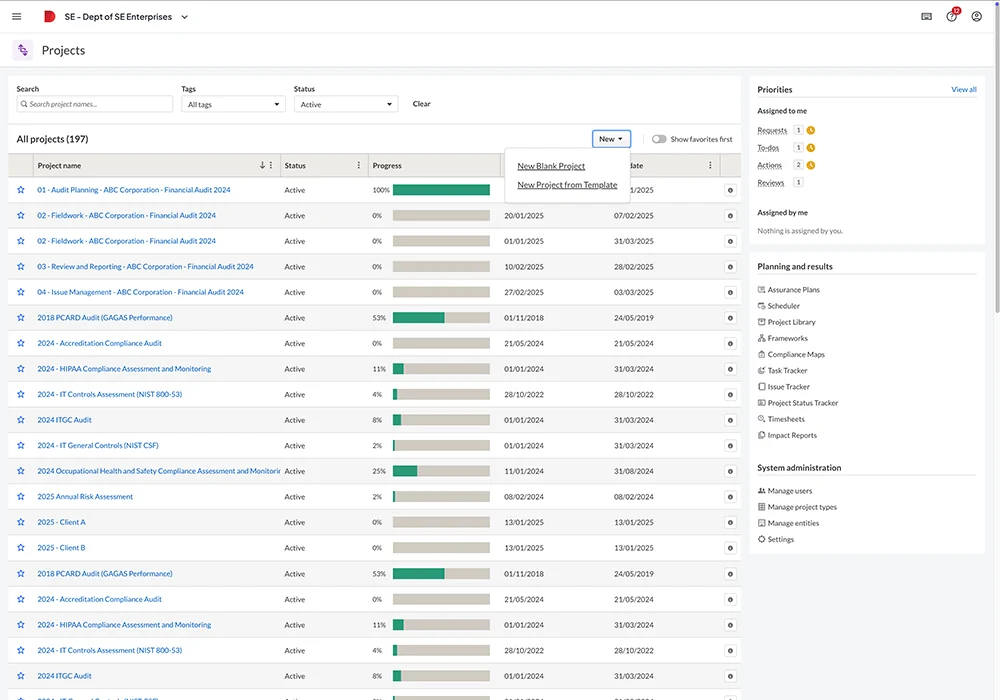
Standardized testing methodologies ensure consistency across global operations, while customizable workflows accommodate specialized control types and jurisdictional requirements.
Teams collaborate seamlessly across locations with real-time updates that eliminate version control confusion. Controls testing results link directly to your GRC framework, ensuring that control deficiencies automatically trigger risk reassessments and remediation workflows.
The Diligent One Platform centralizes risk, compliance and audit under one data environment, eliminating the disconnected systems that create blind spots in control effectiveness. When controls testing identifies deficiencies, the platform automatically updates your enterprise risk register and surfaces critical issues to stakeholders in real time.
This integration ensures that control effectiveness data flows seamlessly to board reporting, compliance monitoring and risk assessment without manual reconciliation or duplicate data entry. Organizations gain a single source of truth for controls across all business units and jurisdictions.
Diligent ACL Analytics delivers advanced capabilities that analyze 100% of transactional data rather than traditional sampling approaches. The platform aggregates data across enterprise systems, automates controls testing execution and surfaces anomalies that warrant investigation.
AI-driven exception detection identifies patterns that manual reviews miss: unusual transaction timing, statistical outliers and relationship anomalies that indicate potential control failures or fraud. These insights enable audit teams to focus investigation resources on genuine risks rather than routine procedures.
Diligent Boards delivers control effectiveness insights directly to your board and audit committee in formats designed for strategic decision-making rather than technical detail. Directors receive dashboards showing control health across the enterprise, trend analysis identifying emerging weaknesses and exception reporting highlighting areas requiring attention.
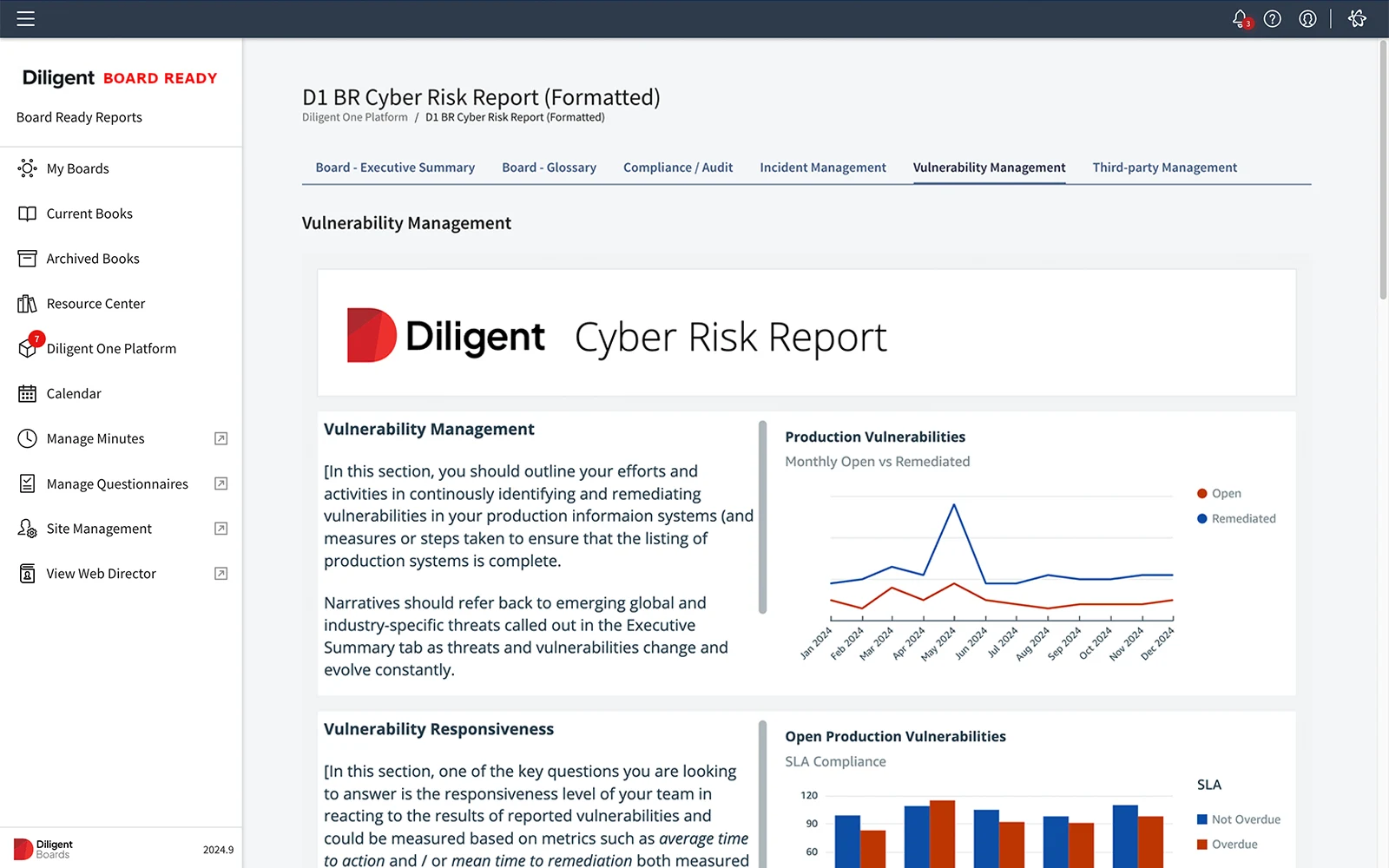
This direct connection between controls testing and board oversight ensures that governance leaders can exercise effective oversight without waiting for quarterly reports or manually compiled summaries. When significant control deficiencies emerge, the audit committee sees them immediately alongside the business context needed for informed decision-making.
The right controls testing technology transforms how internal audit teams operate and demonstrate value. Organizations that make the switch to AI-powered platforms see significant improvements in testing efficiency, continuous control monitoring and strategic advisory capabilities.
Ready to transform your controls testing with AI-powered audit excellence? Request a demo to see how Diligent automates controls validation while maintaining comprehensive risk coverage across your enterprise.
Testing frequency should be risk-based, with high-risk controls tested monthly or quarterly, medium-risk controls tested semi-annually and low-risk controls tested annually. Continuous monitoring through automated tools can supplement periodic testing for comprehensive coverage.
Tests of controls evaluate whether internal controls are operating effectively to prevent or detect errors, while substantive testing directly examines account balances and transactions to detect material misstatements. Both are essential components of a comprehensive audit approach.
Prioritize controls based on their risk assessment, regulatory requirements, financial materiality and potential business impact if they fail. Start with controls that mitigate your highest risks or are required for regulatory compliance, such as Sarbanes-Oxley requirements.
Document the control objective, testing procedures performed, sample selection methodology, results obtained and any deficiencies identified. Include evidence supporting your conclusions and ensure documentation meets professional audit standards and regulatory requirements.
Start with risk-based prioritization of your highest-impact controls, leverage cloud-based audit platforms that don't require extensive IT infrastructure and consider outsourcing specialized testing areas like cybersecurity auditing.
Book a demo to see how Diligent can help you automate, centralize and simplify your controls testing approach.




